
Firefighter health and wellness
I hope everyone had a Merry Christmas and Happy New Year filled with family and friends and you were able to celebrate the true meaning of Christmas.
This article is going to focus on firefighter health and wellness, as well as a few legislative items directly related to firefighter health and wellness. First is the recent Federal Legislation that has been at the forefront of the fire service nationwide. The Honoring Our Fallen Heros Act, initially introduced in January 2025, this bill was successfully passed in both the House and Senate and signed into Law by President Donald J. Trump on December 19th, 2025. This bill was supported by every level of the fire service including the IAFC, NVFC and the IAFF, all who had their respective leaders testify in support of the bill. At the state of Kansas level, the KSFFA fully supported this legislation and I would be remiss to not also acknowledge the delegation from the Kansas City Kansas Fire Department who represented the KSFFA at the Congressional Fire Service Institute Annual, National Fire and Emergency Services Symposium at the United States Capital in Washington D.C. in March of 2025 to advocate for passage of the act.
Passage of this landmark legislation expands federal Public Safety Officer Benefits to include occupational cancer as a line-of-duty death or disability for firefighters. For years, cancer has been the leading cause of line-of-duty death in the fire service, however without this legislation it left families without federal financial support they deserved after the death a firefighter due to cancer. With the passing of the act into law, things have changed. If or when a firefighter cancer diagnosis is connected to a duty related exposure and meets eligibility, it is now presumed to be a line-of-duty injury eligible for PSOB benefits. Some of the criteria needed to be eligible for presumptive consideration are the exposure occurred during the official firefighter’s duties, the firefighter has served at least 5 years prior to being diagnosed, the firefighter was diagnosed within 15 years of the service-related exposure, and the cancer directly resulted in the death or permanent and total disability of the firefighter. The law and provisions are also retroactive for 5 years from the signing into law.
Types of cancers that are considered as exposure related include bladder, brain, breast, cervical, colon, colorectal, esophageal, kidney, leukemia, lung, malignant melanoma, mesothelioma, multiple myeloma, non-Hodgkin’s lymphoma, ovarian, prostate, skin, stomach, testicular and thyroid cancers.
There are also provisions in the law allowing other types of cancers to be added if science and research show the cancer could be acquired due to exposure of firefighting duties.
The legislation acknowledges the repeated exposure to toxic and hazardous environments that firefighters are placed in daily while carrying out their duties. The acknowledgement allows surviving families or permanently disabled firefighters to be eligible for PSOB benefits.
Ultimately this is great news and leads directly into another legislative item at the state level. By the time this article is published in the Fire Wire, the KSFFA annual FRA secretary/treasurer symposium will have already been held in Salina.
During the symposium information related to legislation that was initially introduced in 2025 was discussed. This legislation was initially presented by Wichita Fire Chief Tammy Snow and focused on cancer screenings for firefighters. HB 2024 was introduced in the 2025 legislative session. Concerns of fiscal impact were identified as something that needed to be determined, unfortunately a solution was unable to be determined, and the legislation did not move to become law.
A potential solution has been presented that would have no impact on the state budget but still allow firefighters to obtain cancer screenings. However, this proposal would also require an amendment to the Firefighter Relief Act, meaning opening the Firefighter Relief Act.
The recommendation presented is to amend the relief act to allow FRA funds to pay for cancer screenings. There would be provisions, including members of local FRA voting in favor of utilizing FRA funds the local department receives to be used to pay for or assist with the cost of cancer screening.
Our entire membership knows that we have consistently advocated not to open the relief act and for the KSFFA executive board to oppose any legislation aimed at opening the act. So, before everyone gets upset about the discussion of opening the relief act, and don’t get me wrong, we also have some reservations, but we also see the benefit of opening the act not only for this single specific cause, but also several others.
Discussion has been that if we are going to allow cancer screening, to also include supplemental insurance plans for things such as cancer, heart and lung and ICU coverage to be allowable expenses of FRA funds. These policies would assist with the expenses related to diagnosis and treatment and would alleviate some of the financial burden on the firefighter or their family after a cancer diagnosis. Amending the act would also allow the opportunity to amend the language that limits the KSFFA executive board to only spend $100,000.00 for the premium for the KSFFA LODD policy, and allow for greater benefits for Kansas Firefighters and their surviving families if the inevitable occurs.
This legislation will NOT be introduced for the 2026 legislative session, in our discussions with the legislators who presented this idea, this will be an item that will require careful consideration and an opportunity for discussions to occur not only between the KSFFA executive board and the legislature, but more importantly for the KSFFA membership to have the opportunity to engage and be involved in the decision making process, ultimately the FRA funds are your funds and the membership of the association deserves to be involved in the discussion and decision making process. There is no doubt this item will be a priority discussion topic at the annual KSFFA conference in Manhattan coming up in April for this item to be a potential legislative item for 2027.
It is now more important than ever to take as many precautions as possible to mitigate the risk of occupational cancer. This starts with prevention such as routine exercise, eating healthy, and overall physical and mental well-being. Utilizing all of your PPE, wearing the appropriate PPE for the emergency, as well as proper steps to decontaminate turnout gear while on scene followed by immediate decontamination and washing of PPE once you return to the station. Dirty, soot-stained gear (including helmets) while it looks cool, is doing nothing but keeping the nasty stuff on or close to your body, increasing the risk of occupational cancer, and take a shower as soon as possible to get the carcinogens off of your body.
Documentation is also highly important; everyone should have the ability to document exposure reports and keep track of any time you are in an IDLH atmosphere. In the unfortunate chance you are diagnosed with cancer, the more proof and documentation you have, the better the chance of ensuring approval for PSOB and other potential insurance benefits you or your family will be entitled to.
Lastly, take the time to register on the National Registry for Firefighter Cancer, it free, only takes a few minutes and if you are diagnosed with cancer, it will provide statistical information for research into occupational contracted cancer for future firefighters. This is a small step to “pay it forward” for future firefighters and mitigation of occupational contracted cancer.
Stay safe and make every day a training day,
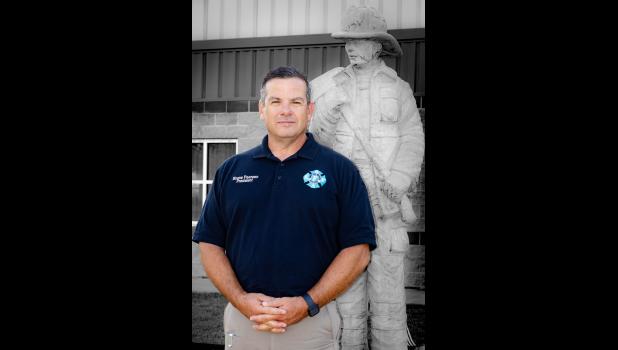
Shane Pearson, KSFFA President